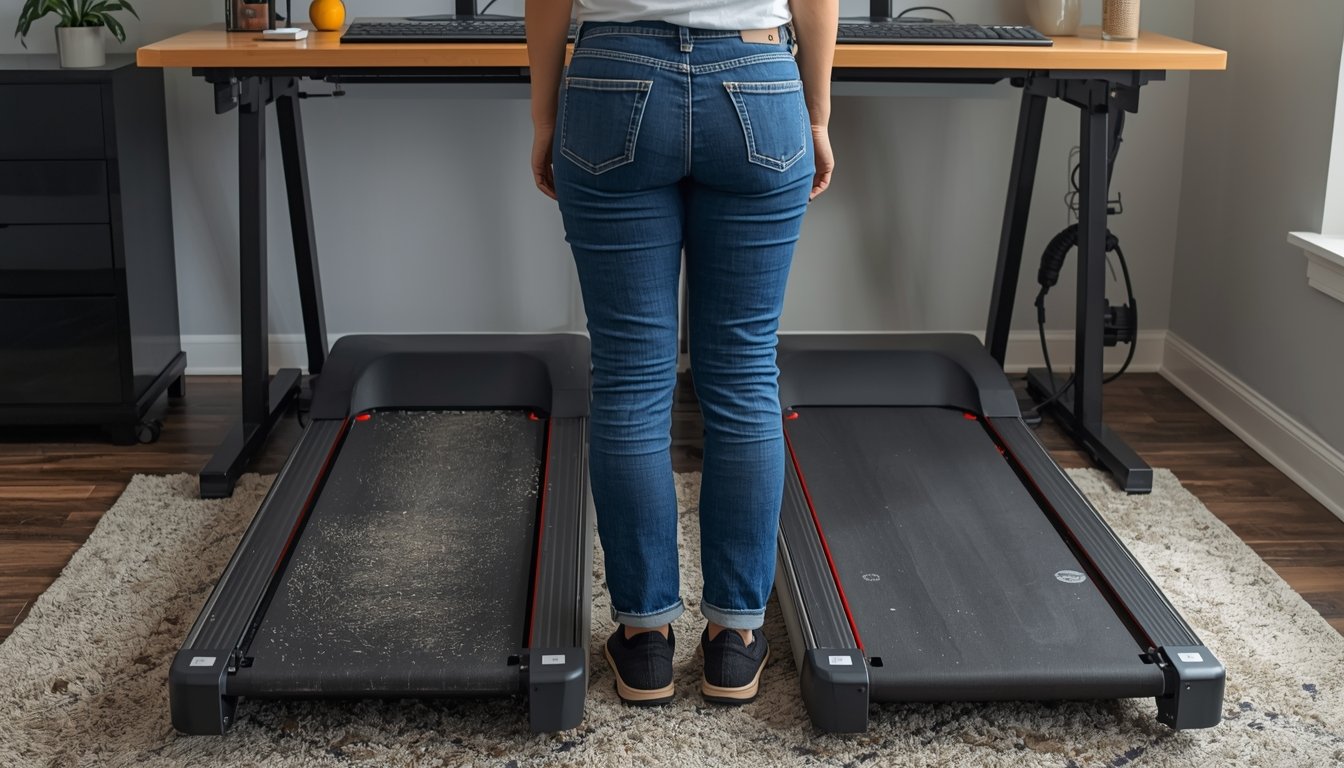
You should repair a walking pad when the problem is small, the machine still feels fundamentally sound, and the fix is likely to restore normal use without much cost or hassle. You should replace it when the issue affects safety, keeps returning, or the machine no longer fits your needs as a reliable part of your routine. If you are already comparing the best walking pads for home office use, this is really the same decision in a different form: is the machine still worth keeping, or has it stopped being a practical fit?
How to think about repair vs replace in a practical way
The easiest mistake people make is treating every walking pad problem like a major failure. In reality, many issues are small. A drifting belt, extra dust buildup, a change in surface feel, or a minor noise problem does not automatically mean the machine is done. Walking pads are compact machines used repeatedly in home environments, so small adjustments and upkeep are part of owning one. If the unit still feels stable, starts normally, and responds well after basic troubleshooting, repair usually makes more sense than replacement.
The opposite mistake is holding on too long to a machine that clearly is not dependable anymore. If the walking pad stops unexpectedly, keeps developing the same issue, feels unsafe underfoot, or has become frustrating enough that you avoid using it, replacement becomes easier to justify. A walking pad only has value if it still works well enough to support your routine. Once reliability drops too far, the machine stops being a convenience and starts becoming a project.
A good way to think about the decision is to separate the problem into three questions. First, is the issue minor or serious? Second, is the fix likely to last? Third, does the machine still match the way you use it now? That final point matters more than people expect. A walking pad can be technically repairable and still not worth repairing if your needs have changed or if you no longer trust it for regular home office use.
Signs a repair usually makes sense
- The belt is slightly off-center but the machine still feels smooth and stable once checked.
- The problem appeared after moving or storing the walking pad and may be setup-related.
- The machine is making more noise than usual, but there is no sign of major instability or unsafe operation.
- Cleaning, alignment, or routine maintenance has not been done recently and is the obvious first step.
- The walking pad is otherwise in good condition and has been reliable up to this point.
- The issue is small enough that fixing it is easier than replacing the machine and setting up a new one.
- You still like the size, storage design, and general fit of the walking pad for your room and desk setup.
When replacement is usually the better decision
Replacement becomes the better choice when the problem goes beyond routine maintenance and starts affecting safety, consistency, or trust. If the machine repeatedly cuts out, feels unstable, develops the same issue again and again, or seems mechanically wrong even after basic troubleshooting, that is a strong sign that the problem is no longer minor. A walking pad is supposed to feel predictable. Once it starts feeling unreliable, it stops being a practical tool for daily use.
Another strong reason to replace is when the machine no longer fits the job you need it to do. This can happen even if it technically still works. Maybe it feels too small now, too noisy for your office setup, too awkward to store, or too limited for the way you use it. In that case, replacement is not just about fixing a fault. It is about admitting that the machine no longer fits your space or routine well enough to justify more effort.
There is also a point where repeated low-level problems become their own answer. A walking pad that is always “almost fine” can still be a poor long-term option. If you keep adjusting the belt, cleaning around the same issue, second-guessing the machine, or avoiding longer sessions because you do not fully trust it, replacement starts to make more sense. The question is not only whether it can be repaired. The question is whether repairing it still gives you a machine you actually want to keep using.
Cost, effort, and downtime all matter
Repair decisions are rarely about the machine alone. They are also about time, inconvenience, and what happens if the fix does not last. A small repair can be worthwhile because it takes little effort and gets the walking pad back to normal quickly. But once a problem starts costing repeated time and attention, the equation changes. Home office equipment should support your routine, not interrupt it every few weeks.
Effort matters just as much as money. Even if a repair looks cheaper on paper, it may not be worth it if it requires repeated trial and error, long waiting times, or continued uncertainty about whether the machine is safe to use. For many people, the real cost of a failing walking pad is not the part itself. It is the frustration of dealing with it, losing momentum, and interrupting the habit of using it during the workday.
Downtime matters too. If you rely on the walking pad often and it is becoming a recurring source of disruption, replacement may be the more sensible long-term decision. A dependable machine keeps your routine intact. An unreliable one creates friction. That is why the repair-versus-replace decision should not focus only on whether a fix is possible. It should also include how much time and confidence the fix actually gives you once the machine is back in use.
Questions to ask before making the final decision
- Does the walking pad still feel safe and stable during normal use?
- Is the issue clearly minor, or does it point to something deeper and recurring?
- Would fixing this problem realistically give you confidence in the machine again?
- Has the walking pad already needed repeated troubleshooting for similar issues?
- Does the machine still fit your room, desk setup, and storage needs well?
- Are you repairing it because it is genuinely worth keeping, or just because you dislike replacing things?
- If you had to rely on it every day next week, would you trust it without hesitation?
How age, usage, and reliability change the decision
A newer walking pad with a small problem is usually easier to justify repairing than an older one with a history of issues. That is not because older machines are automatically bad. It is because reliability matters more over time. A walking pad that has already had several minor problems may still be usable, but each new issue adds context. The same fix that makes sense on a newer, dependable machine may feel less worthwhile on one that has already tested your patience.
Usage matters too. A lightly used walking pad that developed a small problem after being moved or stored may simply need some attention. A heavily used walking pad that now feels tired, noisy, unstable, or inconsistent may be telling you that the machine has reached the point where repair is only a short-term patch. Daily use puts repeated stress on the machine, especially in home offices where it becomes part of a steady routine rather than an occasional exercise tool.
Reliability is really the deciding factor that ties everything together. If the walking pad still feels trustworthy, repair is often sensible. If that trust has gone, replacement becomes easier to justify even if the machine can technically still be fixed. The best walking pad is not just one that works sometimes. It is one that works consistently enough that you stop thinking about the machine and simply use it. Once that reliability disappears, replacing it is often the cleaner decision.