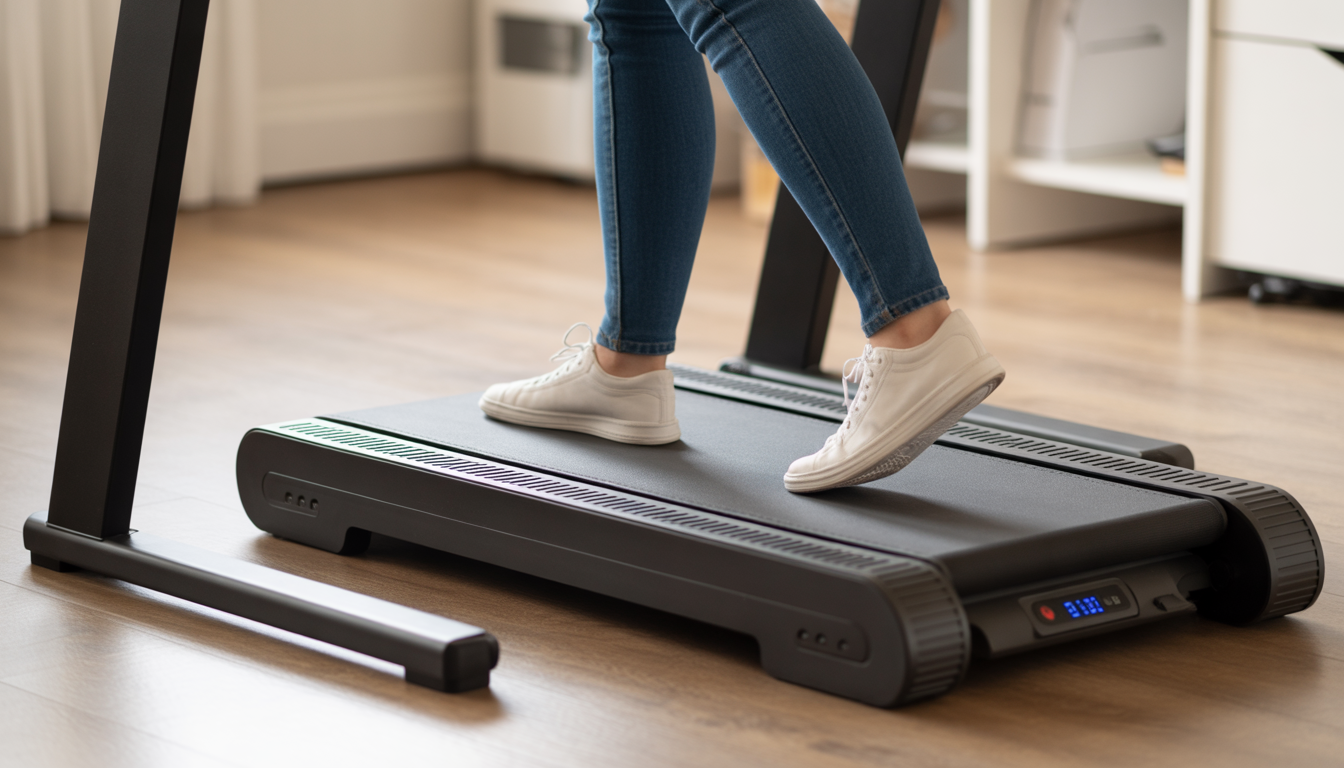
There is no single weight limit for all walking pads. The amount a walking pad can handle depends on the model, but many compact home walking pads are rated for about 100 to 120 kg, while some higher-capacity models go up to about 136 kg or more. The correct answer is always the manufacturer’s stated maximum user weight for that specific machine.
How It Works
A walking pad’s weight limit is based on the strength of its frame, motor, belt system, and deck. Manufacturers test the machine for a maximum user load and publish that limit in the product specifications or user manual.
That limit is not just about whether the machine turns on. It is also about stability, belt tracking, motor strain, and safe long-term use. A walking pad may physically move with more weight on it, but that does not mean it is designed to do so safely or reliably.
What It Can Do
- Give you a clear maximum user weight to compare before buying
- Help match the machine to your body weight and intended use
- Reduce unnecessary strain when used within the rated limit
- Support safer daily walking when the rating is followed
- Show the difference between lighter compact models and heavier-duty models
Limitations / What It Cannot Do
A walking pad’s published weight limit is not a guarantee that every user experience will feel the same near the top end of the range. Stability, comfort, and motor performance can still vary depending on walking speed, session length, stride, and the surface under the machine.
It also does not mean “close enough” is always acceptable. Some treadmill manuals explicitly state not to use the machine above its listed user weight. Exceeding the rating can increase wear and may reduce safety, especially on smaller home machines.
Another limitation is that not all walking pads use the same standard or category. Compact under-desk models usually have lower limits than larger treadmills. A heavier-duty treadmill may support much more weight than a slim walking pad, so the category matters.
When It Works Best
A walking pad works best when your body weight is comfortably within the rated limit rather than right at the edge. That usually allows the frame and motor to operate with less stress and can make the machine feel steadier in regular use.
It also works best when used on a firm, level surface and at the type of pace it was designed for. Most walking pads are made for walking, not running, so the weight rating should be considered together with the intended use.
Common Misconceptions
One common misconception is that all walking pads have roughly the same capacity. They do not. Official specs show meaningful differences between models, from around 100 kg on some compact units to around 136 kg on heavier-duty options.
Another misconception is that the weight limit is only about the frame breaking. In practice, the rating also relates to safe operation, belt performance, and motor load over time.
A third misconception is that a higher number always means a better machine. A higher capacity can be useful, but it often comes with a larger or heavier design, which may not suit every home office or storage setup.
Final Answer Summary
How much weight a walking pad can handle depends on the specific model, not the category alone. Many walking pads are rated around 100 to 120 kg, while some higher-capacity models reach about 136 kg. The safest approach is to follow the exact manufacturer limit for the machine you are considering and avoid exceeding it.