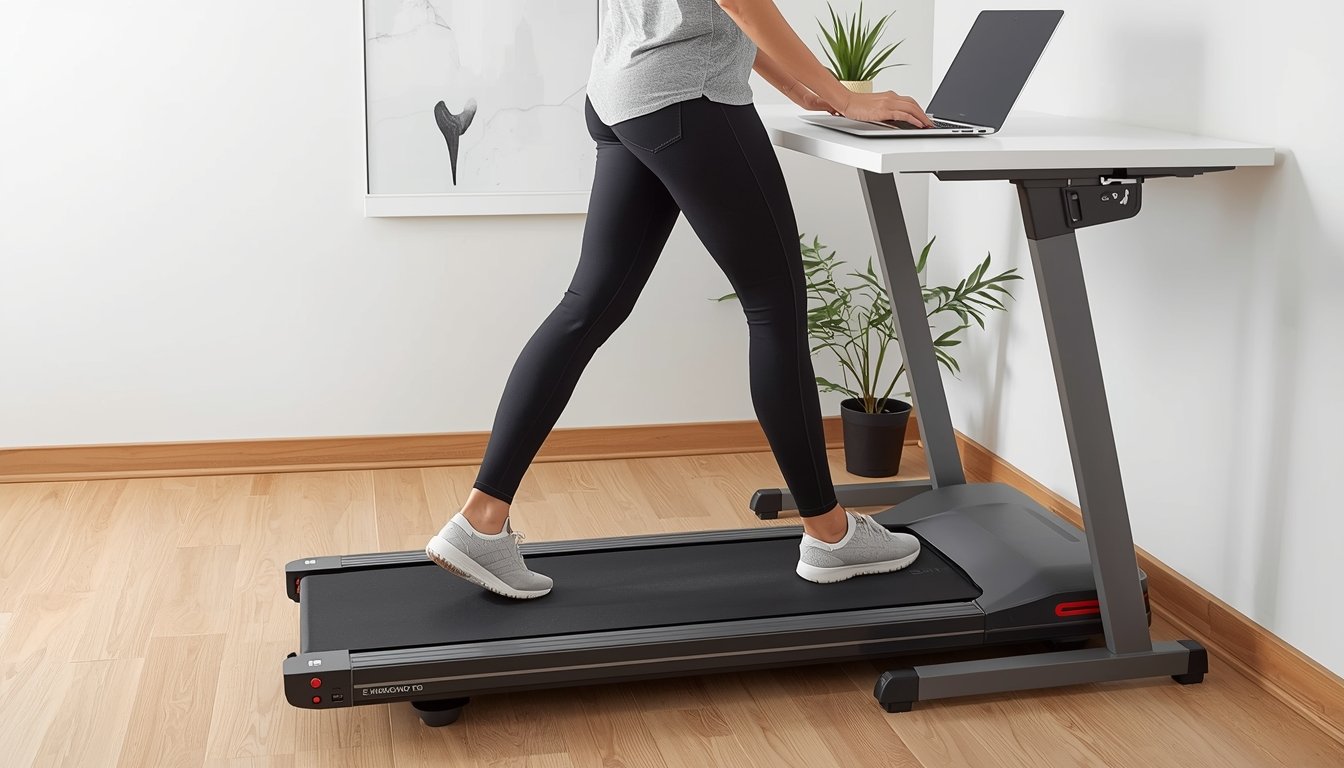
Yes, walking pads are generally safe for daily use for most healthy adults when they are used at a comfortable pace, with proper footwear or stable footing, and with a gradual increase in time and intensity. Daily walking can count toward recommended weekly physical activity targets, but safety depends on your fitness level, medical history, balance, and how the walking pad is used.
How It Works
A walking pad is a compact treadmill designed for low-speed walking rather than running. It provides indoor, controlled movement that can help people break up long periods of sitting and accumulate moderate-intensity activity over the course of a day.
What It Can Do
- Help you accumulate regular physical activity indoors
- Support low-impact daily movement
- Make it easier to break up long periods of sitting
- Fit into a home office routine at slower walking speeds
- Provide a more controlled surface than outdoor walking in some situations
Limitations / What It Cannot Do
A walking pad does not remove normal exercise risks. People can still develop fatigue, soreness, balance problems, or overuse symptoms if they increase duration too quickly, use speeds that are too high, or continue through pain.
It is also not automatically safe for everyone. People who have not exercised in a long time, have heart, joint, balance, or neurological concerns, or are recovering from injury may need medical advice before starting daily use. A walking pad is also not a substitute for strength training, and it does not replace the need for broader exercise habits.
When It Works Best
Daily walking pad use works best when the pace is moderate, the sessions are built up gradually, and the user can maintain stable posture and attention. It is usually more practical for slow walking during desk work or short activity breaks than for intense workouts.
It also works best when the equipment is used in a clear space with enough room to step on and off safely. A steady routine, rather than a sudden jump in daily time, is usually the safer approach.
Common Misconceptions
One common misconception is that if walking is low impact, it can be increased without limits. In reality, low impact does not mean zero risk. Too much time, poor form, or ignoring pain can still lead to problems.
Another misconception is that daily walking pad use is always enough on its own. Public-health guidance recommends aerobic activity plus muscle-strengthening activity each week, so walking is helpful but not complete by itself.
Final Answer Summary
Walking pads are usually safe for daily use when they are used sensibly and matched to the person using them. The safest approach is to start slowly, increase time gradually, and use extra caution if you have medical conditions, pain, balance issues, or have been inactive for a long time.