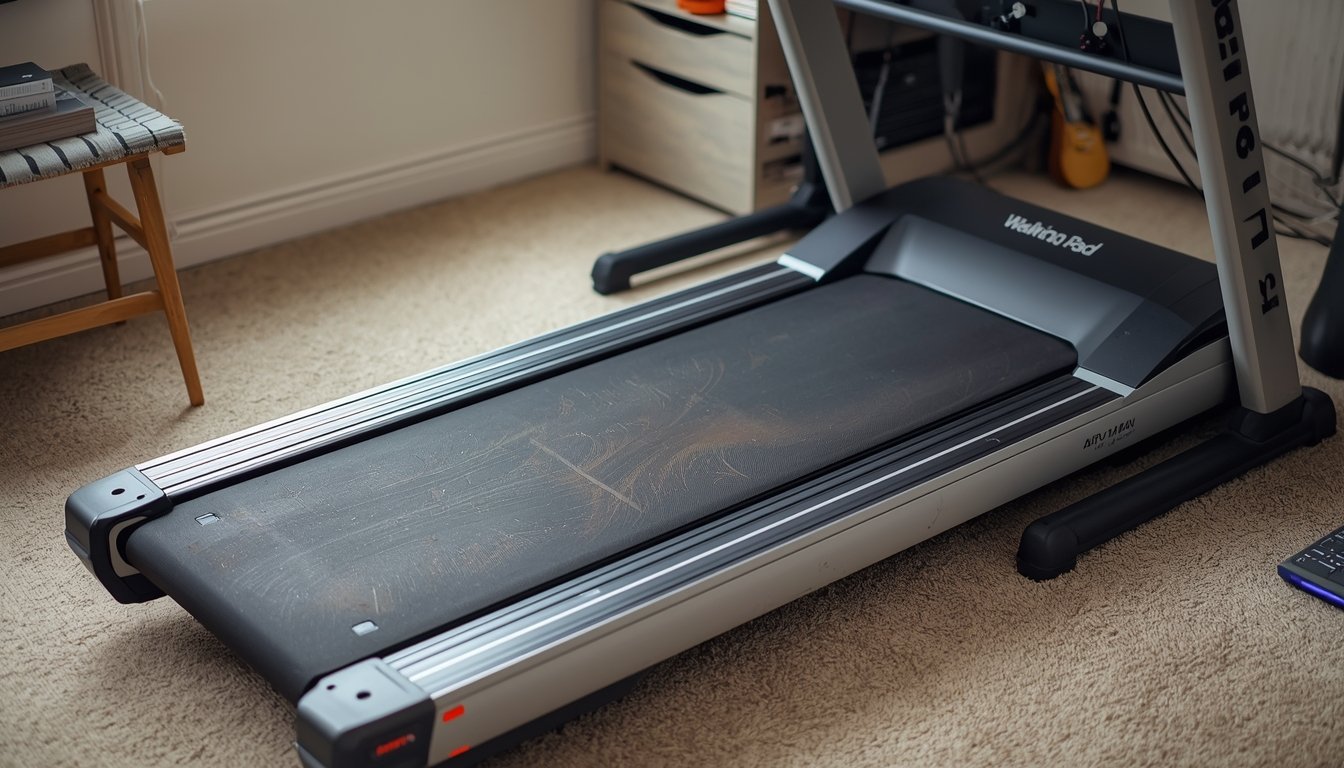
Walking pads can last several years if they are used within their limits and maintained properly. For most people, lifespan depends less on the calendar and more on how often the machine is used, how much weight it supports, how well the belt is maintained, and whether it is kept on a stable surface. A lightly used walking pad in a clean home office can last much longer than one used heavily every day with little maintenance.
If you want your walking pad to last, the main priorities are simple: keep it clean, pay attention to belt condition, avoid overloading it, and fix small issues before they turn into bigger ones. Lifespan is not only about when the machine stops working completely. It is also about how long it stays smooth, stable, and practical enough to keep using comfortably.
What affects how long a walking pad lasts
The biggest factor is usage. A walking pad used for short, steady sessions a few times a week will usually age more slowly than one used for long daily sessions at the top end of its capacity. Compact machines are built for convenience, but they still deal with friction, belt wear, and repeated motor load every time they run. More use means more wear, even when the machine seems to be handling it well.
Setup matters too. A walking pad placed on a firm, level surface usually wears more evenly than one used on unstable flooring. Dust, pet hair, and debris also matter more than people expect because they collect around the belt and deck over time. That can affect smoothness and make the machine work harder than it should. This is one reason regular upkeep makes such a difference.
User habits also play a role. Stepping on roughly, ignoring belt drift, or continuing to use the machine when it feels noisy or uneven can shorten its useful life. If you are already comparing the best walking pads for home office use, it helps to remember that even a good model will not last as well if the day-to-day setup and maintenance are poor.
Signs a walking pad is aging well or wearing out
A walking pad that is aging well usually still feels predictable. The belt stays centered, the walking surface feels smooth, and the machine sounds about the same from week to week. That does not mean it feels brand new forever, but it should still feel stable enough that using it is routine rather than something you keep monitoring.
When a walking pad starts wearing out, the change is usually gradual. The belt may need more frequent adjustment. The machine may become noisier, feel less smooth at your usual pace, or seem more sensitive to small setup changes. In some cases, it still works, but it stops feeling reliable. That matters because lifespan is not only about whether the machine powers on. It is also about whether it still feels good enough to keep as part of your routine.
- Belt drift starts happening more often than before
- The machine feels rougher or noisier during normal use
- Performance changes noticeably after short periods of use
- The walking surface no longer feels stable underfoot
- Cleaning and minor adjustments no longer improve the experience much
These signs do not always mean the walking pad is finished, but they do suggest that age, wear, or neglected maintenance are catching up with it. The more of these signs appear together, the more likely it is that the machine is moving toward the end of its most useful life.
How to help a walking pad last longer
The best way to extend lifespan is to treat maintenance as normal rather than optional. Keep the machine clean, check the belt regularly, and respond early when something feels slightly off. Small issues are easier to manage than repeated wear caused by ignoring them. A walking pad usually lasts longer when it stays consistently well cared for instead of swinging between neglect and last-minute fixes.
It also helps to use the machine in a way that matches its design. Walking pads are usually meant for steady walking, not constant hard use or rough treatment. Staying within the intended use makes the machine work less aggressively and often keeps it feeling smoother over time. Storage habits matter too. If the machine is moved and stored, do it carefully and keep it in a clean, dry area rather than somewhere damp or dusty.
In practical terms, a walking pad lasts longest when it stays easy to use. Once it becomes noisy, awkward, unstable, or frustrating, its useful life starts feeling shorter even if it still runs. That is why the best approach is simple: keep it clean, keep it level, keep the belt in good condition, and pay attention when something changes instead of waiting for a major problem.