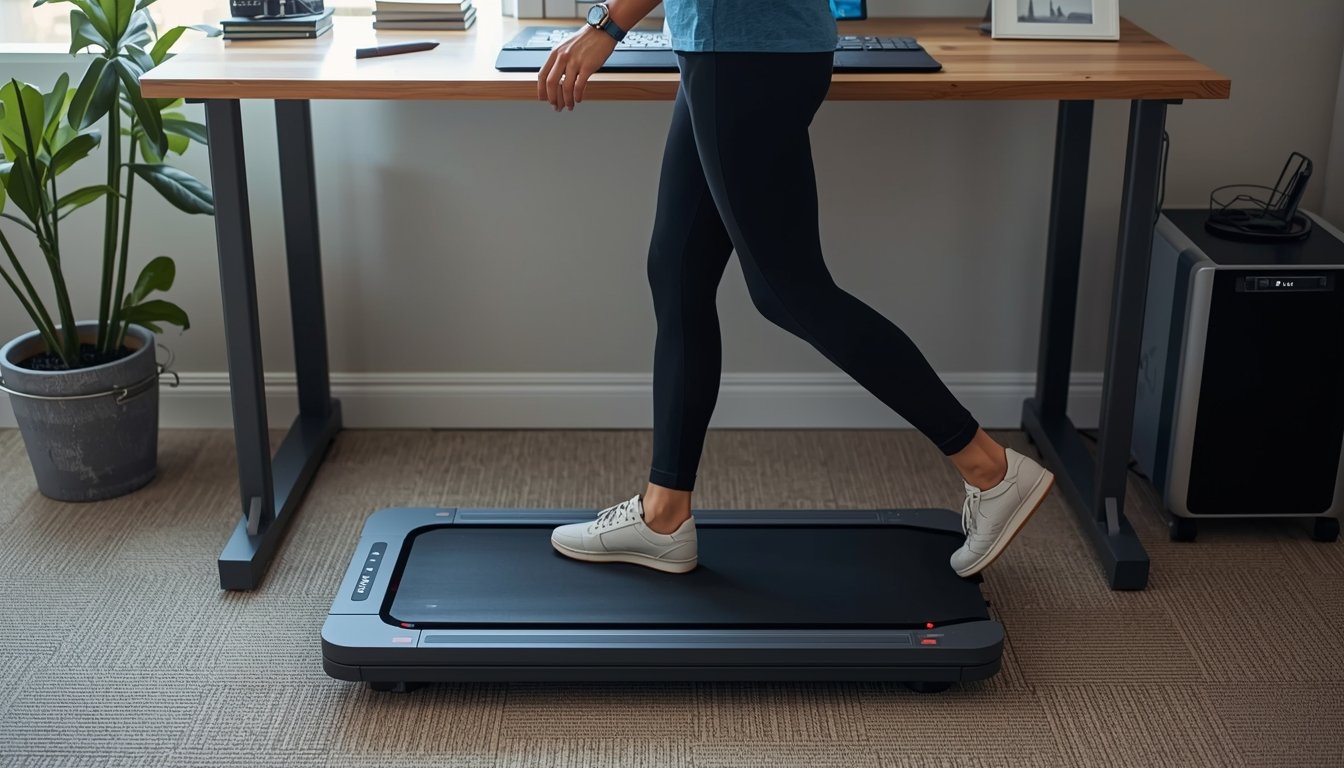
Yes, walking pads burn calories because any walking uses more energy than sitting still. The exact amount depends on your body weight, walking speed, and how long you use the machine, but even slow desk walking can raise calorie burn compared with staying seated.
That matters most when you look at the bigger picture of your day. A walking pad is not magic, but it can make it easier to add light movement during work hours and increase total daily activity. If you are already comparing the best walking pads for home office use, calorie burn is really one part of a broader benefit: moving more often instead of spending the whole day sitting.
How calorie burn on a walking pad actually works
Calorie burn on a walking pad is driven by energy expenditure, not by the machine itself. The Compendium of Physical Activities defines one MET as roughly 1 kcal per kilogram of body weight per hour, and treadmill desk walking at 1.0 to 2.0 mph is listed at about 2.8 METs. That means slow walking while working burns more than sitting, but less than brisk outdoor walking or more intense exercise.
The practical takeaway is that body size and pace matter. A heavier person usually burns more calories at the same speed than a lighter person, and walking a little faster usually burns more than strolling very slowly. The walking surface is also only part of the equation. If you use the machine regularly, those smaller calorie increases can add up across a week even when no single session feels like a workout.
This is also why calorie numbers on watches or apps should be treated as estimates rather than guarantees. They can be useful for tracking trends, but they are not exact measurements of what every person burns on a walking pad.
What to expect from a walking pad in real life
A walking pad is most useful when you see it as a way to increase total movement, not as a shortcut to huge calorie burn. Slow desk walking can help you burn more than sitting, and it can make long desk days less sedentary, but it will not match harder cardio sessions. That makes it a practical tool for consistency rather than intensity.
- Walking slower than 1.0 mph burns more than sitting, but usually less than a normal walking pace.
- Treadmill desk walking at 1.0 to 2.0 mph is a light-activity range, not a high-intensity training range.
- Longer sessions and more frequent use usually matter more than chasing a slightly faster speed during desk work.
- A walking pad helps most when it replaces sitting time you would otherwise accumulate during the day.
For most home office users, that is the real benefit. A walking pad can make movement easier to fit into the day, and that can support both calorie burn and general activity levels over time. The better question is usually not whether it burns calories at all, but whether it helps you move more consistently than you would without it.
Related Guides
- Do Walking Pads Actually Help You Stay Active?
- Walking Pad Speed Needs
- Best Walking Pads for Home Office