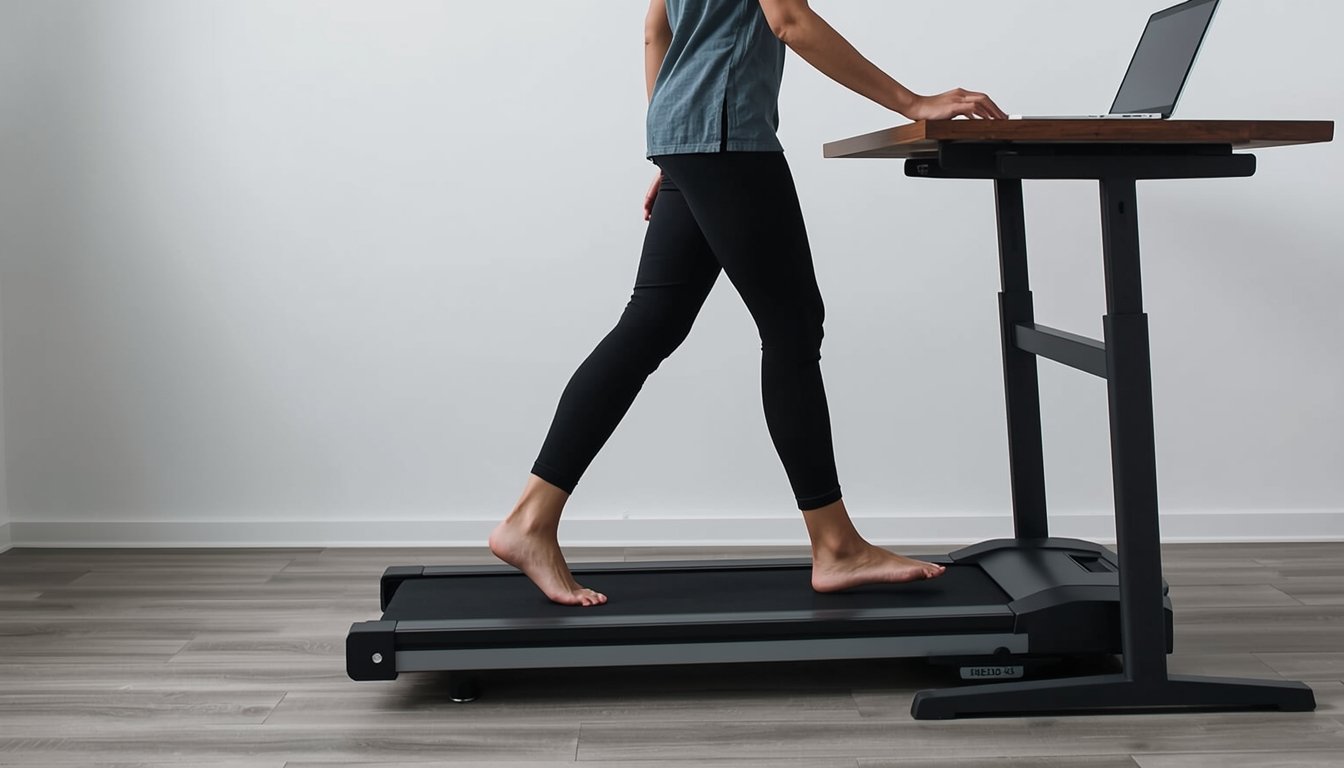
Walking pads can be quiet enough for office use, but they are not silent. In practice, the main sounds usually come from the motor, foot impact, and vibration through the floor, so whether a walking pad feels quiet enough depends on the machine, the speed, and the workspace.
How It Works
A walking pad creates noise from several sources at once. The motor makes a steady mechanical sound, the belt adds movement noise, and each step can create impact noise that transfers into the floor.
This is why a walking pad that looks quiet on a product page may still sound different in a real office. The room, flooring, footwear, and walking speed all affect how noticeable it feels.
What It Can Do
- Provide low-speed movement with less noise than a full treadmill
- Work reasonably well in some home office environments
- Stay less disruptive at slower walking speeds than at faster speeds
- Become quieter when used on a firm surface with a mat
- Suit some shared spaces better than larger fitness equipment
Limitations / What It Cannot Do
A walking pad cannot guarantee a silent work environment. Even when a manufacturer describes the motor as low-noise, that figure may not capture footsteps, floor vibration, or how the sound travels in a room.
It also cannot be assumed that all offices are equally suitable. Safe Work Australia says noise should be lower than 50 decibels for work that involves high concentration or lots of conversation, which means a walking pad may be acceptable in one setting but distracting in another.
Another limitation is that “quiet enough” is partly situational. A machine may feel acceptable for reading email or simple tasks but still be too noticeable for video calls, shared rooms, or spaces with very little background noise.
When It Works Best
Walking pads work best for office use when they are used at low walking speeds, on a firm floor, and with a mat that helps reduce vibration. They are also easier to tolerate in home offices than in very quiet shared workplaces.
They tend to work better for tasks that do not need constant precision. Slow walking while reading, listening, or doing light admin work is usually more practical than trying to do detailed work while moving.
Common Misconceptions
One common misconception is that a low decibel claim means the walking pad will always feel quiet in any room. It does not. A stated motor noise figure does not fully reflect impact noise from footsteps or how sound carries through floors.
Another misconception is that if a walking pad is marketed for office use, it will automatically suit shared offices. Some models may be suitable for home offices, but that does not mean they will be unnoticed in a quiet workplace.
A third misconception is that noise is only about the machine itself. In real use, flooring, shoes, desk position, and walking speed can matter just as much.
Final Answer Summary
Walking pads can be quiet enough for office use, especially in home offices and at slower speeds, but they are not silent. The best answer is that some models are quiet enough for practical work use, while others may still be distracting in very quiet rooms, shared offices, or during calls.