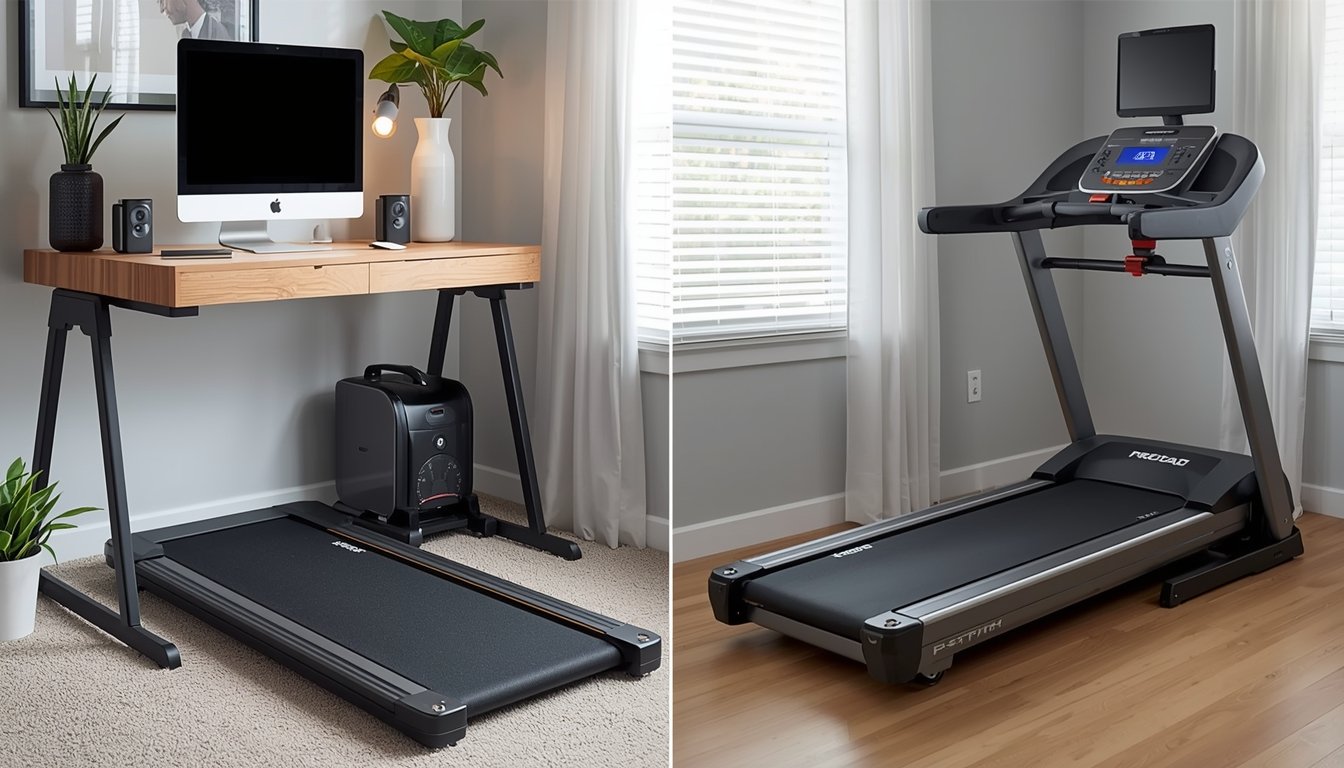
A walking pad can replace a treadmill for some people, but not for everyone. It can serve as a practical substitute if your goal is light walking, desk-based movement, or small-space daily activity. It is usually not a full replacement if you want running, higher speeds, larger deck space, or more intensive training.
How It Works
A walking pad is a compact treadmill built mainly for walking and light movement. Many models are designed for under-desk use or for small rooms, which is why they are usually lighter, slimmer, and easier to store than standard treadmills.
A full treadmill is typically built for broader use. It often supports higher speeds, larger running surfaces, stronger incline features, and more demanding workouts. That difference in design is the main reason a walking pad can replace a treadmill in some situations but not in all of them.
What It Can Do
- Replace a treadmill for light walking and daily step-focused activity
- Work well in home offices and small rooms where a full treadmill would be impractical
- Support low-speed walking while working or during short indoor sessions
- Offer easier storage and portability than most standard treadmills
- Provide a practical substitute if running is not part of your routine
Limitations / What It Cannot Do
A walking pad usually cannot replace a treadmill for running or harder workout training. Official product guidance shows many walking pads are designed mainly for walking and light jogging, while standard treadmills are built for much higher speeds and more demanding exercise.
It also cannot provide the same amount of deck space, stability, and support that many full treadmills offer. That matters if you have a longer stride, want incline-based training, or need a machine that feels more stable at higher effort levels.
Another limitation is workout range. A walking pad is often enough for staying active, but it is not always enough for users who want interval training, longer runs, or a machine that can cover both desk walking and serious fitness sessions.
When It Works Best
A walking pad works best as a treadmill replacement when your main goal is daily movement rather than exercise performance. It is especially useful for home office setups, apartments, and routines focused on walking instead of running.
It also works best when space and storage matter as much as exercise. If you need something compact, easy to move, and practical for low-speed indoor use, a walking pad can replace a larger treadmill more successfully.
Common Misconceptions
One common misconception is that a walking pad is simply a smaller treadmill with no trade-offs. In reality, the smaller size often comes with lower speeds, a shorter deck, and a more limited workout range.
Another misconception is that all walking pads can be used for running. Some 2-in-1 models allow limited running modes, but many walking pads are primarily built for walking and light jogging rather than full treadmill-style training.
A third misconception is that a full treadmill is always necessary to stay active indoors. For many people, especially those focused on walking and reducing sitting time, a walking pad can cover their practical needs without replacing every treadmill function.
Final Answer Summary
A walking pad can replace a treadmill if your goal is light walking, daily movement, and small-space convenience. It usually cannot fully replace a treadmill if you want running, harder workouts, higher speeds, or a larger and more stable deck for broader training use.