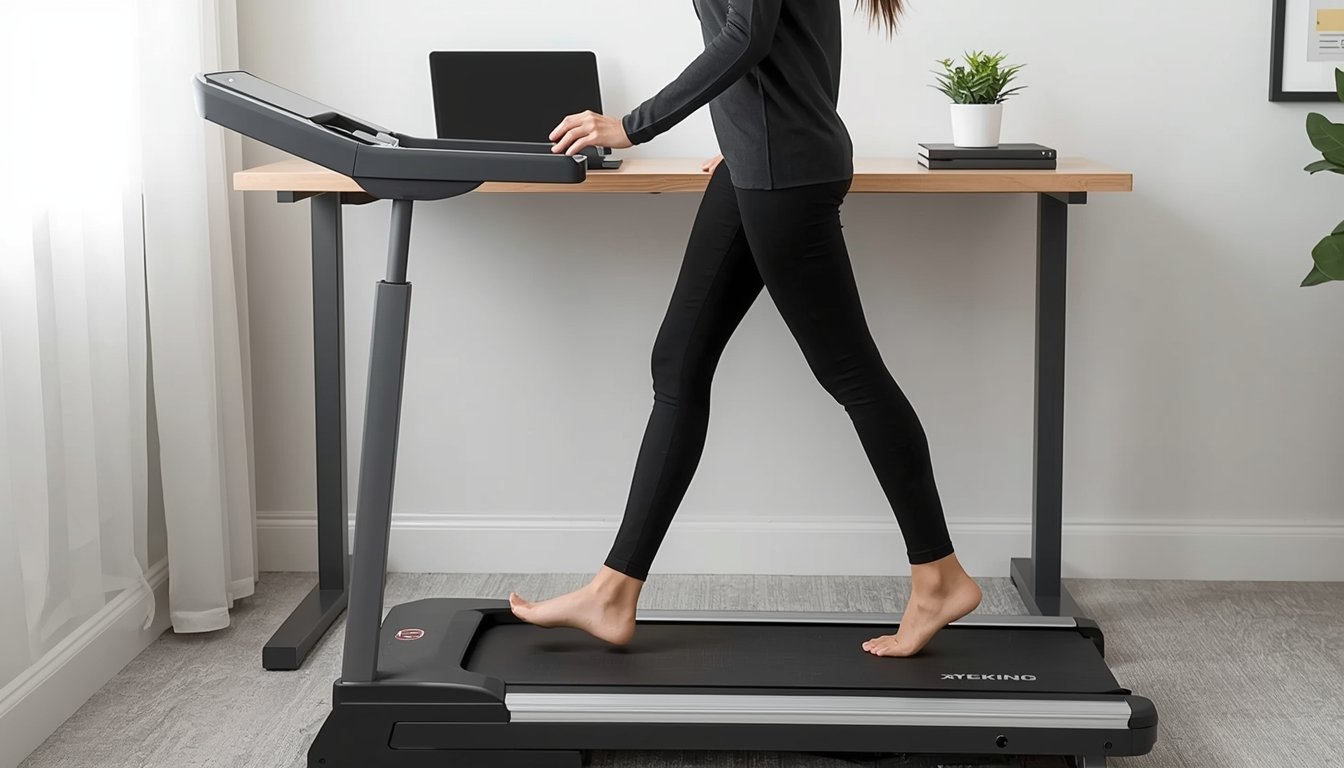
Walking pads are useful for light indoor walking, but they have clear limitations. Compared with larger treadmills, they usually have lower top speeds, smaller walking surfaces, lower user-weight limits, and a stronger focus on walking rather than running or harder training.
How It Works
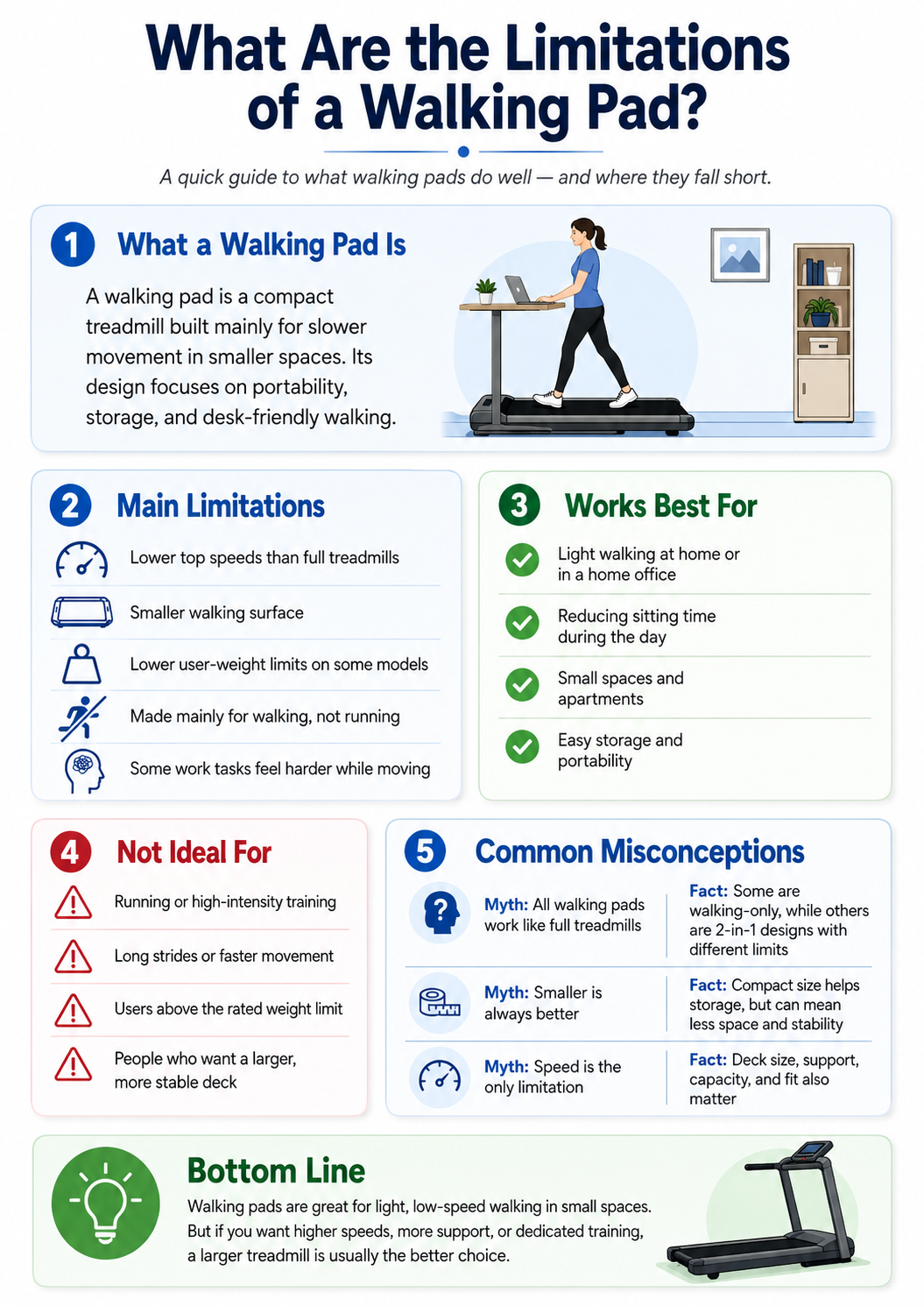
A walking pad is a compact treadmill built mainly for slower movement in smaller spaces. The design prioritizes portability, storage, and desk-friendly walking, which is why many models are lighter, slimmer, and easier to store than full treadmills.
That compact design also explains many of the trade-offs. When a machine is made smaller and lighter, it often has a shorter belt, lower capacity, and less room for long strides or higher-speed use.
What It Can Do
- Support light walking in a home office or small room
- Reduce sitting time by adding movement during the day
- Fit into spaces where a full treadmill would be impractical
- Store more easily because many models are foldable or slim
- Work well for low-speed walking and desk-based use
Limitations / What It Cannot Do
A walking pad usually cannot do everything a full treadmill can do. Many models are built specifically for walking, and some official product pages state that they do not provide enough support for running. Even on 2-in-1 models, the running function depends on the model design and handrail position rather than being standard across all walking pads.
Walking pads also cannot offer the same amount of deck space and support as larger treadmills. Current product specs show common walking areas around 47 to 48 inches long and about 15.8 to 16.5 inches wide on compact models, which is adequate for walking but more restrictive for longer strides or faster movement.
Another limitation is user capacity. Some compact models are rated around 100 kg or 110 kg, while heavier-duty versions go higher. That means not every walking pad suits every user, and capacity limits matter for both comfort and safe long-term use.
They also cannot guarantee that work performance will feel the same as sitting or standing still. Research on treadmill workstations shows variability in typing and cognitive performance, and some tasks are simply harder to do while moving, even at slow speeds.
When It Works Best
Walking pads work best when the goal is light walking in a small space rather than running or structured training. They are especially practical for home offices, apartments, and rooms where portability and storage matter more than maximum power or workout intensity.
They also work best when expectations match the design. If you want a compact machine for short to moderate low-speed sessions, a walking pad can fit that role well. If you want higher speeds, larger deck space, or dedicated exercise training, a larger treadmill is usually the better fit.
Common Misconceptions
One common misconception is that all walking pads can also be used like full treadmills. In reality, some are walking-only models, while others are 2-in-1 designs with different limits and operating modes.
Another misconception is that smaller always means easier for everyone. A compact design helps with storage, but it can also mean a shorter walking area, lower capacity, and less stability compared with a larger treadmill.
A third misconception is that walking pads are only limited by speed. In practice, the main limitations also include deck size, support, capacity, and how well the machine fits the user’s stride and environment.
Final Answer Summary
The main limitations of a walking pad are that it is usually smaller, slower, and less capable than a full treadmill. Walking pads work well for light walking and small-space use, but they are generally not the best choice for running, higher-impact training, larger users outside the rated limit, or people who need a bigger and more stable deck.