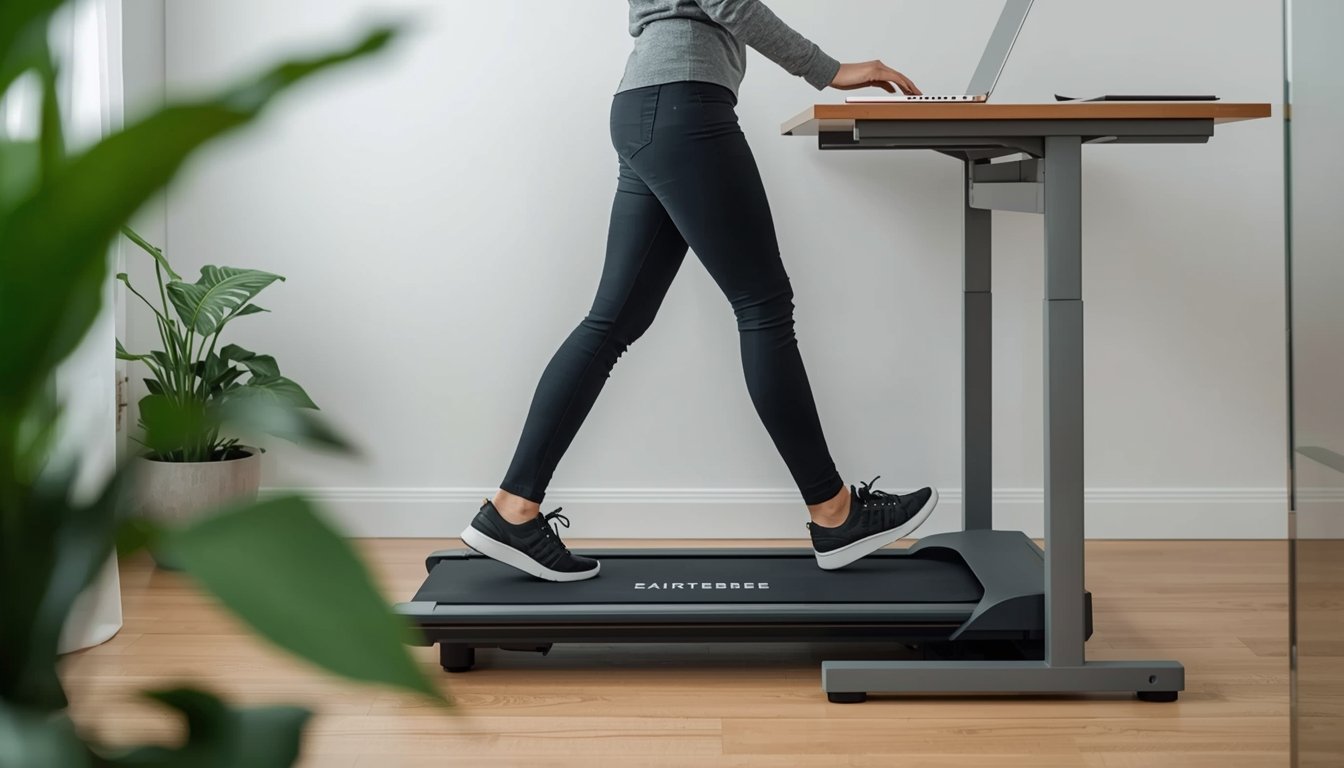
The features that matter most in a walking pad are usually size, speed range, weight capacity, walking area, stability, and storage design. These features affect whether the machine actually fits your space, supports your body weight, and works comfortably for desk walking or daily home use.
How It Works
A walking pad is a compact treadmill built mainly for walking rather than running. Because it is smaller than a full treadmill, the most important features are the ones that affect fit, comfort, and safe operation in a limited space.
That is why manufacturers and treadmill guidance repeatedly focus on dimensions, intended use, capacity, and basic operating specs before extra features. If the machine is the wrong size, too narrow, or not rated for the user, the other features matter much less.
What It Can Do
- Fit under a desk or into a smaller room if the dimensions are suitable
- Provide a usable walking range when the speed settings match desk work
- Support safer operation when the user weight stays within the rated capacity
- Feel more comfortable when the walking area is long and wide enough for your stride
- Be easier to store when the unit folds or includes wheels
Limitations / What It Cannot Do
A walking pad cannot make up for a poor fit just by adding smart features. If the deck is too short, the frame feels unstable, or the weight capacity is too low, app controls or extra display functions will not solve the core problem.
It also cannot be assumed that “more features” always means “better for desk work.” For many people, the best walking pad is simply one with the right size, safe capacity, a practical speed range, and a stable feel at slow walking speeds.
Another limitation is that some useful-looking features depend on the type of use. Incline, app connectivity, or advanced controls may matter for some buyers, but they are usually less important than basic fit, stability, and intended walking use.
When It Works Best
A walking pad works best when the dimensions fit both your room and your stride, the speed range suits low-speed walking, and the weight rating comfortably covers the user. It also works better when it is easy to move or store, especially in home offices or apartments.
For desk work, slower speed capability matters more than a high top speed. For smaller spaces, folding design, net weight, and wheels become more important. For heavier users, capacity and deck stability matter more than compactness alone.
Common Misconceptions
One common misconception is that the top speed is the most important spec. For desk walking, the lower and more controllable end of the speed range is usually more relevant than the maximum speed.
Another misconception is that all walking pads fit the same space. Official specs show major differences in unfolded size, folded size, walking area, and user capacity across models.
A third misconception is that app features or smart controls are essential. They can be useful, but they are generally secondary to size, stability, and safe capacity.
Final Answer Summary
The most important walking pad features are the ones that affect real-world fit and safe use: size, speed range, weight capacity, walking area, stability, and storage design. Extra features can be useful, but they matter less than choosing a machine that fits your space, your body weight, and the way you actually plan to use it.