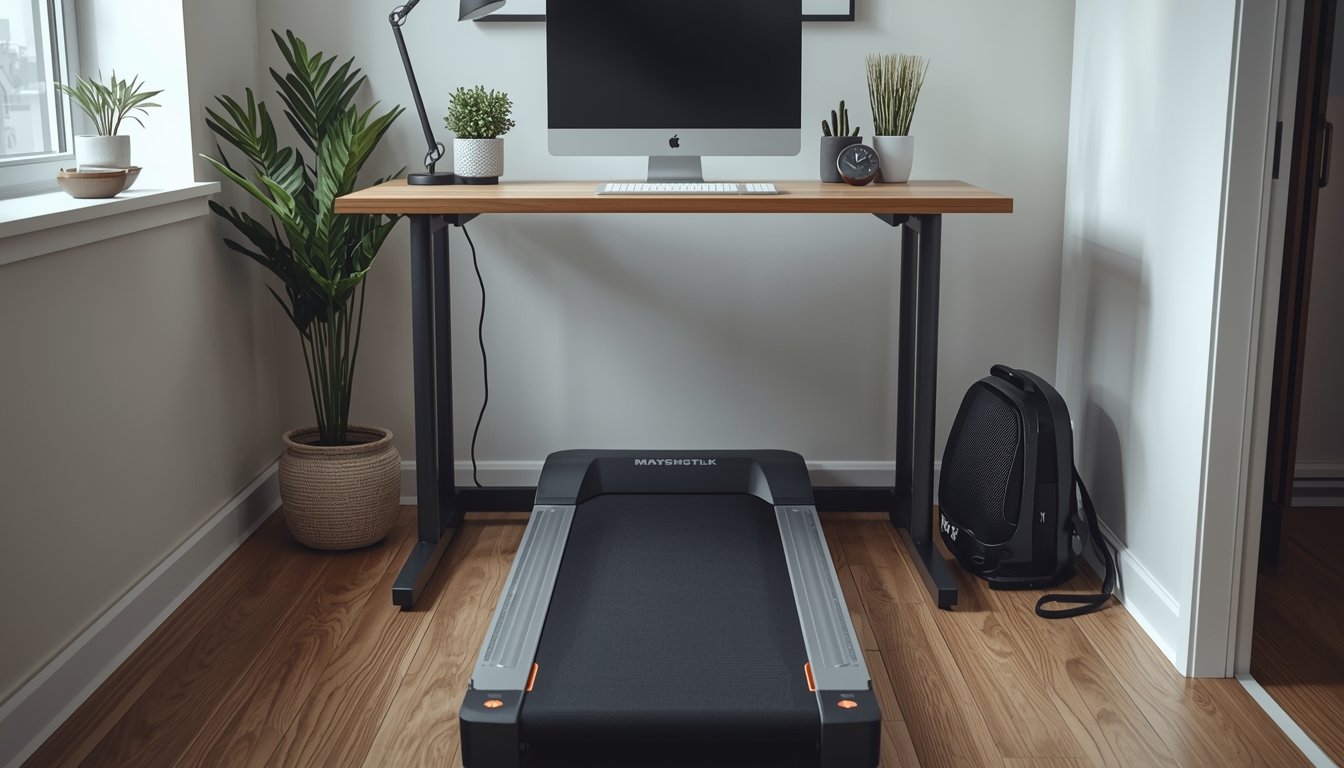
Walking pads are generally quiet enough for office use, especially at low walking speeds, but they are not completely silent. Most models produce a low hum from the motor and light footstep noise, which is usually acceptable in a home office but may still be noticeable in shared spaces.
What Noise You Can Expect in a Home or Shared Office
In real use, the noise from a walking pad comes from two main sources: the motor and your footsteps on the belt. The motor noise is typically a soft, consistent hum that blends into the background, similar to a fan or air conditioner.
Footstep noise is often more noticeable. Even at slower speeds, each step creates a light tapping sound as your foot makes contact with the belt. On its own, this is usually not loud, but it can become more noticeable over time, especially in quiet environments.
In a home office, most people find this level of noise manageable, particularly when working alone. However, in shared offices or apartments, sound can travel through floors and walls. If you are working above someone else, the vibration from footsteps can be more noticeable than the motor itself.
Surface type also plays a role. If you are unsure how flooring affects sound, this guide on walking pads on hard floor vs carpet explains how different surfaces can either amplify or reduce noise.
What Makes One Walking Pad Quieter Than Another
Not all walking pads perform the same when it comes to noise. Some are noticeably quieter due to design differences, even if they have similar specifications.
Key factors that affect noise include:
- Motor quality — better motors produce smoother, quieter operation
- Belt design — a well-aligned belt reduces friction and noise
- Speed — lower speeds significantly reduce both motor and footstep noise
- Weight and stability — heavier, more stable units tend to vibrate less
In most cases, walking between 1–3 mph is the quietest and most practical range for office use. Once you increase speed, both motor noise and foot impact become more noticeable.
It is also worth noting that lighter, budget models may produce slightly more vibration, especially if they are placed on hard flooring without any cushioning.
How to Reduce Walking Pad Noise in Your Workspace
If noise is a concern, there are simple ways to make a walking pad quieter in everyday use.
- Use a protective mat to reduce vibration on hard floors
- Walk at lower speeds for smoother, quieter movement
- Wear cushioned shoes to soften foot impact
- Place the walking pad on a stable, even surface
- Avoid placing it directly above shared living areas if possible
A mat is often the most effective solution, especially in apartments. It helps absorb vibration and prevents noise from transferring through the floor.
In most setups, once you control vibration and keep speeds moderate, a walking pad becomes quiet enough to use during work calls or focused tasks. The goal is not complete silence, but a consistent, low-level background noise that does not interfere with your workflow.
If you are trying to keep noise to a minimum, choosing the right model matters just as much as how you use it. This guide to quiet walking pads for office use highlights options designed specifically for low-noise environments and shared spaces.