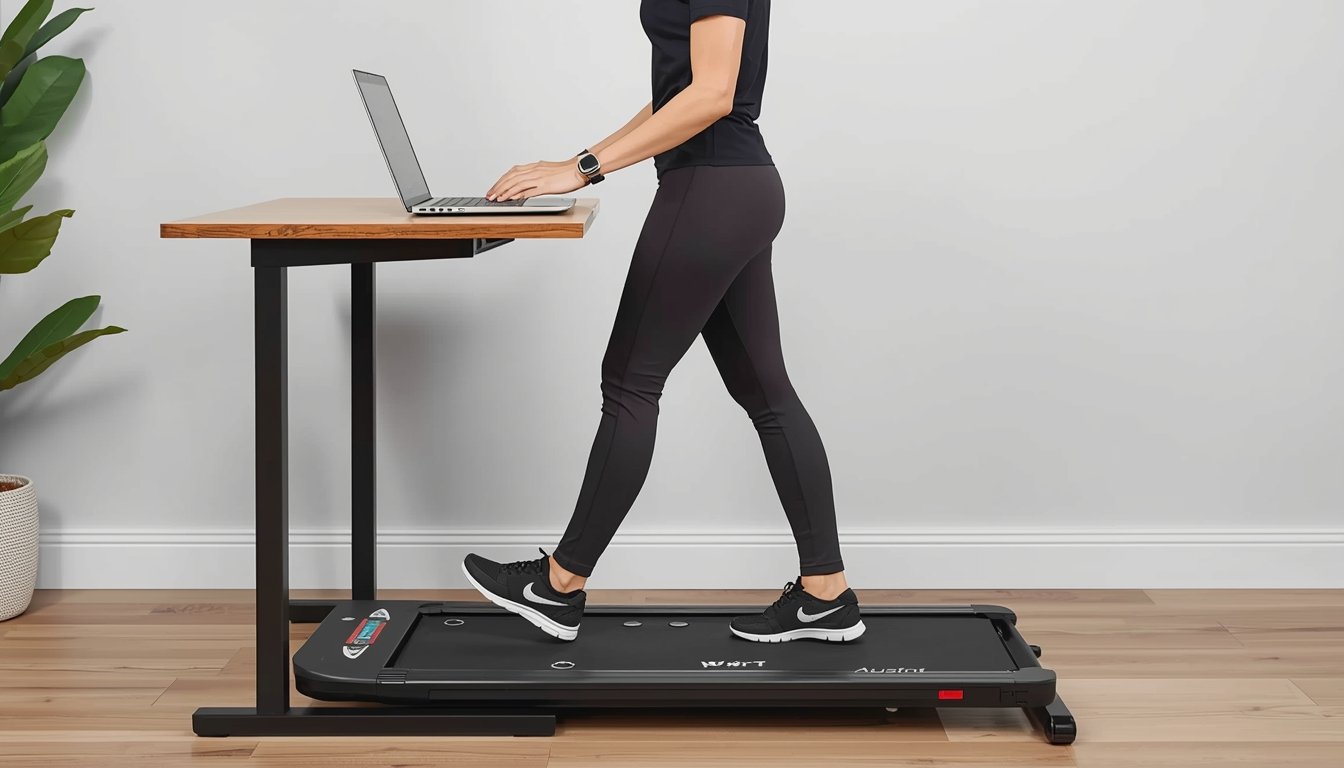
Walking pads can be worth it for home offices if the goal is to reduce sitting time and add light movement during the workday. They are usually most worthwhile for people who work at a desk for long periods, have space for a compact machine, and want a practical way to walk more indoors.
How It Works
A walking pad adds low-speed movement to a home office routine, usually under or near a standing desk. Instead of staying seated for long periods, the user can build in short walking sessions across the day.
This can matter because active workstation research shows treadmill desks can increase daily physical activity and reduce sitting time. In a home office, that makes the value of a walking pad less about replacing a workout and more about making movement easier to fit into normal work hours.
What It Can Do
- Help reduce long periods of sitting during desk work
- Increase daily movement and light activity
- Raise energy expenditure compared with sitting still
- Work well in home offices where short walking sessions are practical
- Support a more active workday without leaving the room
Limitations / What It Cannot Do
A walking pad cannot guarantee that someone will meet all physical activity recommendations on its own. Adults still need broader aerobic activity and muscle-strengthening activity each week, so a walking pad is a tool for more movement, not a complete exercise replacement.
It also cannot guarantee that every type of desk work will feel the same while walking. Research on active workstations shows that some tasks, especially typing and precision work, can be affected depending on speed and workstation setup.
Another limitation is practicality. A walking pad may be less worthwhile if the workspace is too small, the floor setup is poor, or the user is unlikely to use it regularly. The value depends heavily on actual use rather than the machine itself.
When It Works Best
Walking pads are most worthwhile in home offices when the user spends many hours sitting, already has or can use a standing desk, and can build walking into low-demand tasks such as reading, calls, or email. They are also more practical in home environments than in many shared offices because the user has more control over space and noise.
They also work best when used consistently in shorter sessions rather than treated like an all-day solution. For many people, the value comes from breaking up sedentary time rather than walking continuously for hours.
Common Misconceptions
One common misconception is that a walking pad is only worth it if it replaces formal workouts. In reality, it can still be useful if it simply helps reduce sitting and add more movement during the day.
Another misconception is that walking pads automatically improve every part of working from home. They can help with movement, but they do not eliminate the need for good desk setup, varied posture, or other forms of exercise.
A third misconception is that they are only worthwhile for high-productivity multitasking. In practice, they often work best for simple tasks and slower-paced parts of the workday rather than every task all at once.
Final Answer Summary
Walking pads can be worth it for home offices when they help a person sit less and move more during the workday. They are most useful for people with desk-based routines, enough space to use them safely, and realistic expectations about their role as a movement tool rather than a full exercise replacement.