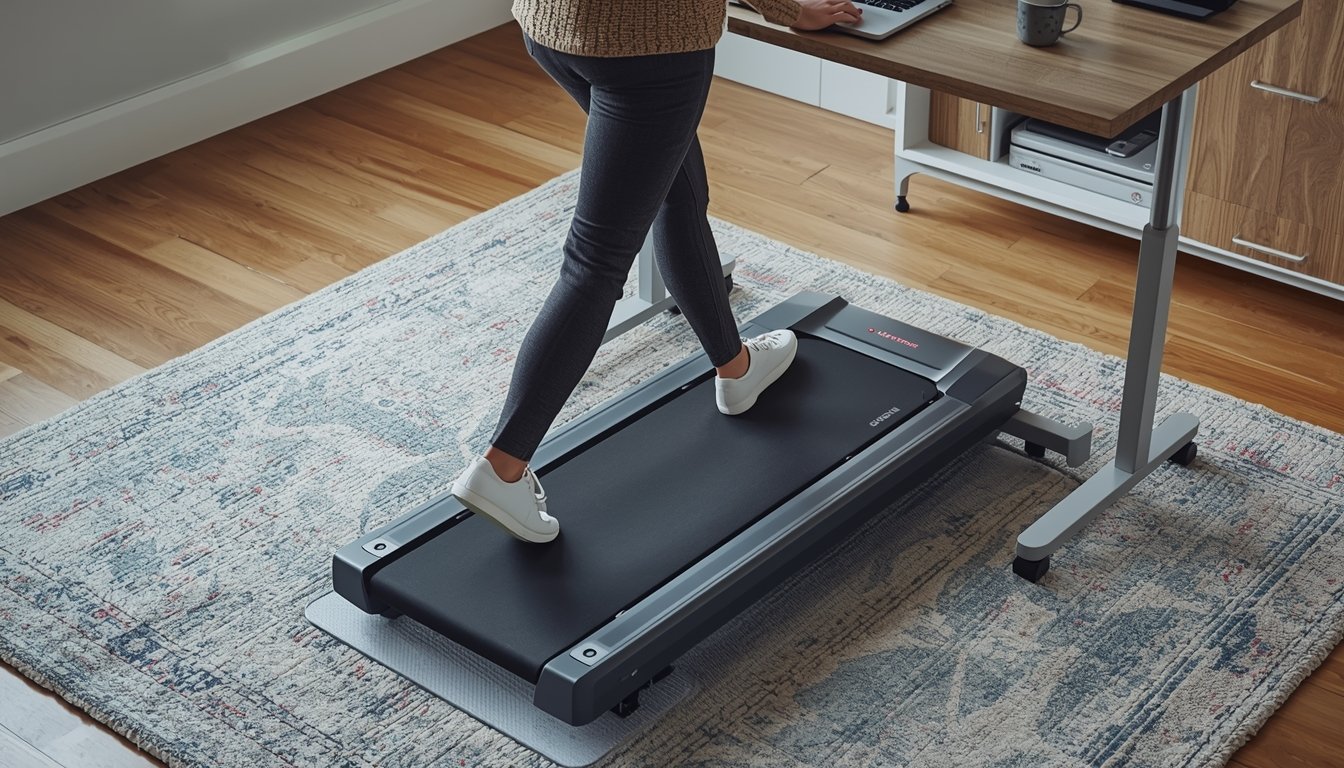
Using a walking pad on hard floor versus carpet does change how it performs, particularly in terms of stability, noise, and overall comfort. Hard floors tend to feel more stable but can increase vibration, while carpet can reduce noise but may affect balance and motor efficiency depending on thickness.
If you are setting up your walking pad in a small home or apartment, surface choice can make a noticeable difference in daily use. This is especially important when you are trying to balance comfort, noise, and practicality in a limited space. For a broader setup overview, this guide on choosing a walking pad for small apartments explains how surface type fits into the bigger picture.
Stability Differences Between Hard Floor and Carpet
One of the first things most people notice is how different the walking pad feels underfoot depending on the surface.
On hard flooring such as timber, tiles, or laminate, the walking pad sits flat and firm. This creates a more stable walking experience because the base does not compress under weight. As a result, your steps feel more predictable, and the machine is less likely to shift slightly during use.
Carpet, on the other hand, introduces a softer and sometimes uneven base. Thicker carpets or those with underlay can compress when you step, which can make the walking pad feel less stable. This is not always unsafe, but it can feel slightly “spongy,” especially at higher walking speeds.
In most homes, low-pile carpet performs reasonably well, while thick or plush carpet is where stability issues are more noticeable. If the surface is uneven, the walking pad may not sit completely flat, which can affect both comfort and long-term wear.
Noise and Vibration: What You Will Actually Notice
Noise behaves very differently depending on the surface beneath your walking pad, and this is especially important in apartments or shared living spaces.
Hard floors tend to amplify vibration. While the motor itself may be quiet, the impact of your footsteps can travel through the floor, creating a low-frequency vibration that neighbours below may notice. This is often described as a dull thumping sound rather than a loud noise.
Carpet helps absorb some of this vibration. The softer surface reduces the transfer of impact, which can make the walking pad feel quieter overall. However, this does not eliminate noise completely. The motor and belt movement are still present, but the overall effect is usually less noticeable compared to hard flooring.
The difference becomes more obvious the longer you use the machine. Short sessions may feel similar on both surfaces, but extended use highlights how vibration behaves over time.
Impact on Walking Comfort and Feel
Comfort is another area where surface type plays a role, especially if you are using the walking pad regularly while working.
Hard floors create a firmer walking experience. Some people prefer this because it feels more controlled and closer to walking on a standard treadmill. However, over longer sessions, the lack of cushioning can make it feel slightly more fatiguing on the joints.
Carpet introduces a softer feel underfoot, which can be more comfortable for extended use. The slight cushioning can reduce the impact on your feet and legs, making it easier to walk for longer periods without discomfort.
That said, too much softness can have the opposite effect. If the surface compresses unevenly, it can change your walking rhythm slightly, which may feel less natural over time. This is why balance is important — a small amount of cushioning is beneficial, but excessive softness can reduce walking consistency.
When You Should Use a Protective Mat
- Using a walking pad on hard floors to reduce vibration and protect the surface
- Adding stability on slightly uneven or low-pile carpet
- Preventing long-term wear on flooring from repeated use
- Reducing noise transfer in apartments or shared buildings
- Helping the walking pad sit more evenly if the surface is not perfectly flat
A protective mat is one of the simplest ways to improve performance on both surfaces. On hard floors, it acts as a buffer that reduces vibration and protects against scratches. On carpet, it can create a more stable base, particularly if the carpet is not completely firm.
The key is choosing a mat that is firm enough to support the walking pad without adding too much extra softness. A thin, dense mat is usually more effective than a thick, soft one.
Performance and Motor Load on Different Surfaces
Surface type can also affect how efficiently the walking pad operates, although this is something many people do not consider initially.
On hard floors, the walking pad runs with minimal resistance. The motor does not have to compensate for any surface compression, which helps maintain consistent performance. This can be beneficial for long-term durability, especially if you use the machine frequently.
Carpet can introduce additional resistance, particularly if it is thick. As the walking pad sinks slightly into the surface, the motor may need to work a bit harder to maintain speed. Over time, this can lead to slightly increased wear, especially on lower-powered models.
For most users, this difference is not dramatic, but it becomes more noticeable with extended daily use. If you are planning to use your walking pad for several hours a day, surface choice can have a small but meaningful impact on performance.
Choosing the Right Setup Based on Your Floor Type
- Hard floor: use a protective mat to reduce vibration and noise
- Low-pile carpet: generally safe to use, but check for stability
- Thick carpet: consider adding a firm mat to create a stable base
- Shared apartments: prioritise vibration reduction regardless of surface
- Frequent use: choose the most stable setup to reduce wear and improve comfort
The best setup depends less on the type of floor alone and more on how stable and consistent the surface feels during use.
If your walking pad feels stable and does not shift, you are already in a good position. If it feels uneven or slightly unstable, adding a mat or adjusting placement can make a significant difference.
In most homes, a simple combination of a stable surface and a thin protective mat provides the best balance between comfort, noise control, and long-term usability.
Related Guides