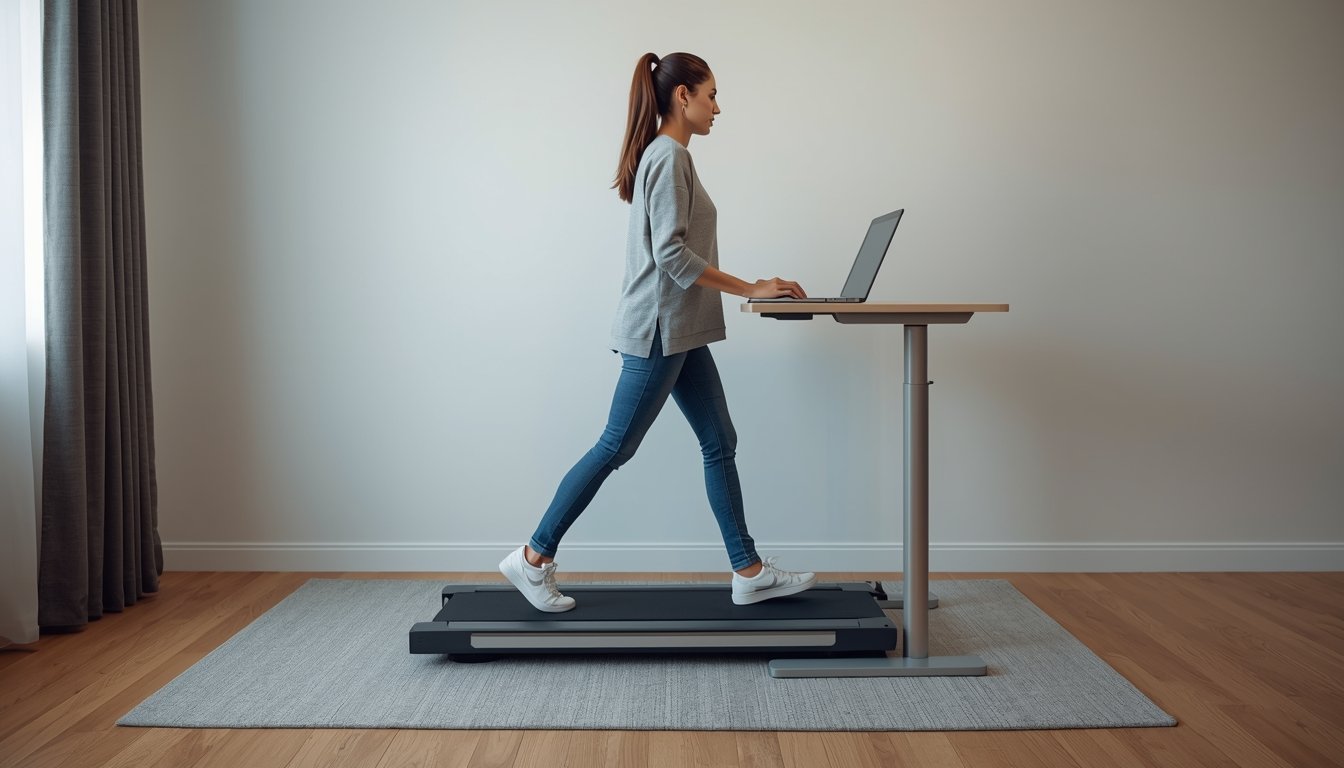
You don’t always need a mat under a walking pad, but in most setups it is strongly recommended. A mat helps reduce noise, improve stability, and protect your flooring, especially if you are using the walking pad regularly or in an apartment.
When a Mat Makes the Biggest Difference
In many homes, a walking pad will work without a mat, but you will often notice improvements as soon as you add one. The biggest benefit is reducing vibration, particularly on hard floors like timber, tile, or laminate.
Without a mat, each step creates a small amount of impact that transfers directly into the floor. This can cause a low-level vibration that is more noticeable in quiet environments or upstairs apartments. Over time, it can also lead to minor movement of the walking pad if the surface is not perfectly stable.
A mat acts as a buffer between the machine and the floor. It absorbs some of the impact and helps the walking pad sit more evenly. This becomes especially useful if your surface is slightly uneven or if you are using the walking pad for longer sessions.
Floor type also matters. If you are unsure how your surface affects performance, this guide on walking pad use on hard floor vs carpet explains when extra support is most useful.
What a Mat Actually Improves in Daily Use
Using a mat changes how the walking pad feels and performs in subtle but noticeable ways.
- Reduces vibration and noise, especially on hard floors
- Protects flooring from scratches and wear
- Helps the walking pad stay in place during use
- Improves stability on slightly uneven surfaces
These improvements are not always obvious at first, but they become more important with regular use. For example, even small movements of the walking pad can become frustrating over time, especially if you are trying to work while walking.
A mat also helps create a more consistent surface. This can make walking feel smoother and more controlled, which is important if you are using the walking pad daily.
Mats can also help reduce noise transfer, especially on hard floors. If sound is a concern, this breakdown of quiet walking pads for office use highlights models designed to operate more quietly in shared or noise-sensitive environments.
When You Might Not Need a Mat
There are situations where a mat is less important, particularly if your setup is already stable.
- Low-pile carpet that provides natural cushioning
- Very stable flooring with minimal vibration
- Occasional use rather than daily use
- Quiet environments where noise is not a concern
Even in these cases, some users still prefer using a mat for added protection and consistency. It is not always essential, but it often improves the overall experience.
In most setups, a thin, dense mat works best. Thick, soft mats can create too much cushioning, which may reduce stability rather than improve it.
The key takeaway is that while a walking pad can work without a mat, using one usually makes the setup quieter, more stable, and easier to use over time.
If you are using a walking pad on softer surfaces, choosing a model that works well with carpet can also reduce vibration and improve stability. This guide to walking pads for carpet explains which options are better suited to these conditions.