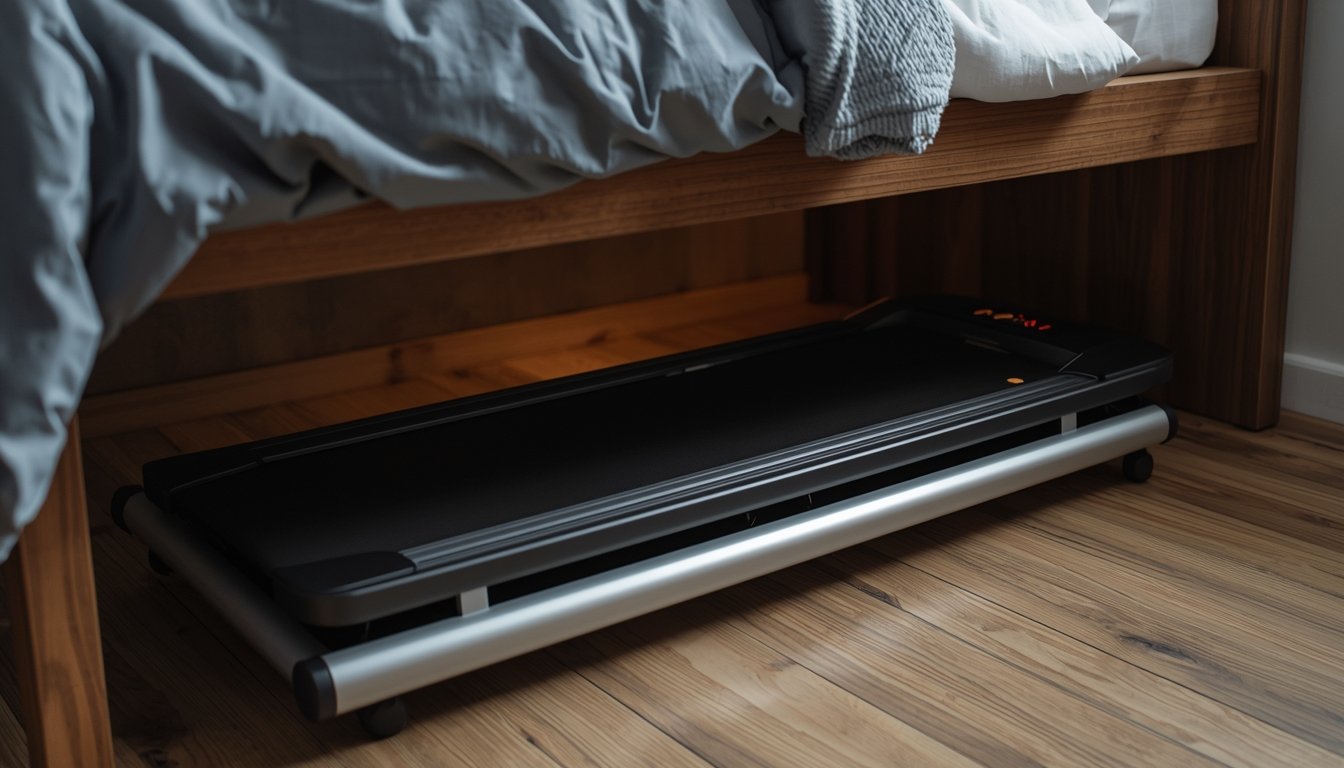
Yes, most walking pads are designed to be stored under a bed or couch, as long as there is enough height clearance and the unit is slim enough. Storage is one of their main advantages, but it only works well if your furniture and layout allow easy access without lifting or awkward movement.
What You Need for Under-Bed or Couch Storage
The first thing to check is height clearance. Most walking pads are low-profile, but they still require enough space to slide underneath furniture without getting stuck. In many homes, beds and couches have just enough clearance, but this varies depending on design.
You also need to consider how easily the walking pad can move. Most models include wheels, which allow you to roll the unit in and out rather than lift it. Without wheels, even a relatively lightweight walking pad can feel heavy and inconvenient to handle regularly.
Common things to check before relying on under-furniture storage:
- Height clearance under the bed or couch
- Whether the walking pad has built-in transport wheels
- Floor surface (carpet vs hard floor affects movement)
- Clear path to slide the unit in and out
If any of these are limited, storage quickly becomes less practical. For example, thick carpet can make it harder to roll the walking pad smoothly, which may discourage you from putting it away after each use.
How Practical Storage Is for Daily Use
While most walking pads can technically fit under furniture, the real question is how practical it is to store and retrieve them every day.
In many setups, convenience is the deciding factor. If you have to lift, tilt, or reposition furniture each time, you are less likely to use the walking pad consistently. The goal is to make storage quick and effortless so it becomes part of your routine rather than a task.
A well-designed setup allows you to:
- Roll the walking pad out in a few seconds
- Place it directly under your desk without adjustment
- Return it to storage without lifting
- Keep your space tidy without rearranging furniture
If your current layout makes this difficult, it may be worth adjusting your workspace slightly. Even small changes can improve how easy it is to use and store the walking pad regularly.
If you are planning your setup from scratch, this guide on how much space you need for a walking pad can help you ensure both use and storage work smoothly together.
When Under-Furniture Storage Doesn’t Work Well
There are situations where storing a walking pad under a bed or couch is not the best option.
- Very low furniture with limited clearance
- Thick carpet that makes rolling difficult
- Heavy walking pads without smooth wheels
- Blocked access that requires moving other items
In these cases, alternative storage options may be more practical. Some people choose to store the walking pad upright against a wall or keep it partially visible in a corner of the room.
The key is finding a solution that supports regular use. A walking pad that is easy to access will be used more often, while one that is difficult to move or store may end up unused.
Related Guides