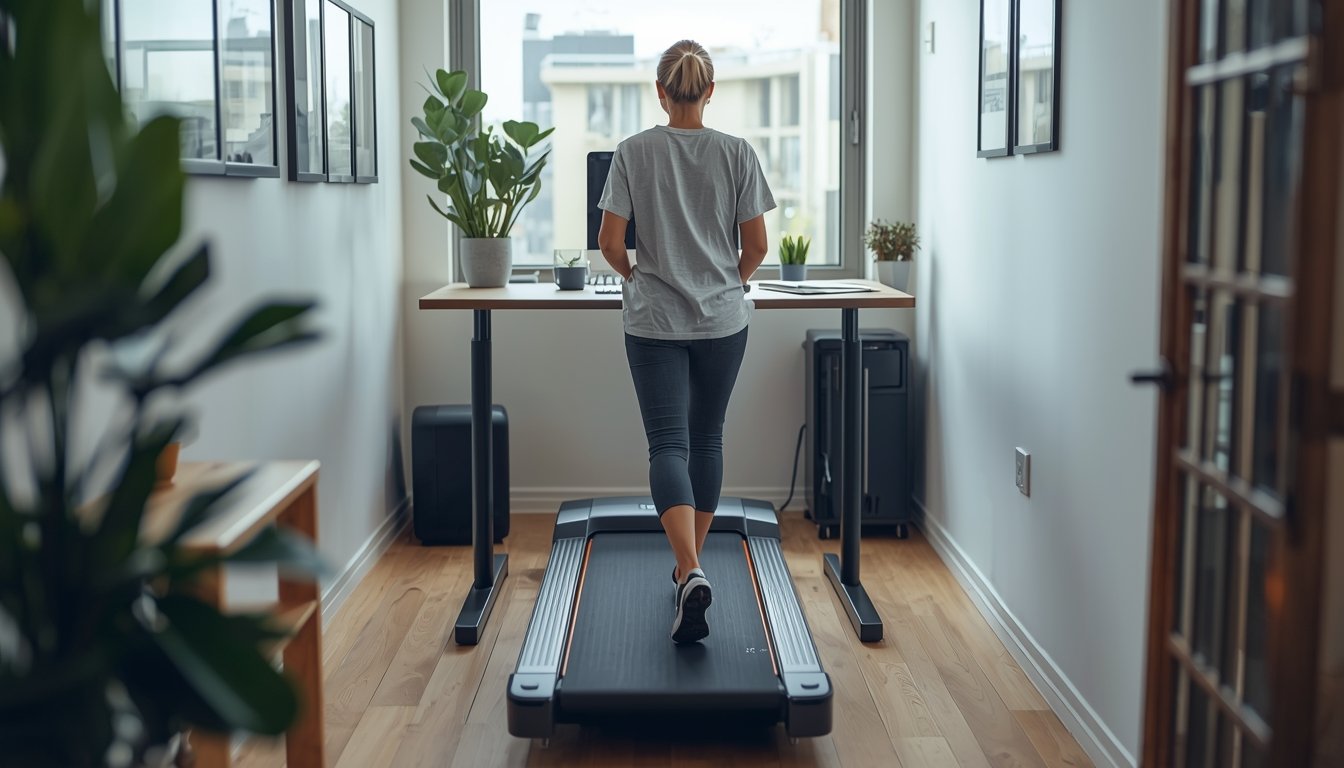
Most walking pads require about 120–150 cm in length and 50–65 cm in width, but you also need extra clearance around the unit for safe use. In practice, you should allow a small buffer in front, behind, and on the sides so you can step on and off comfortably without feeling cramped.
Minimum Space for Safe and Comfortable Use
The listed size of a walking pad only tells part of the story. While the machine itself may be compact, using it comfortably requires a bit more room than its footprint.
At a minimum, you should have enough space to stand naturally on the belt and step off without hitting furniture. If the walking pad is placed directly under a desk, you also need to consider how much space your feet have to move without being restricted by the desk frame.
In smaller home offices or apartments, a tight fit can quickly become frustrating. If the walking pad is too close to walls or furniture, it can feel awkward to use, especially during longer sessions.
A practical guideline is:
- 10–20 cm of clearance on each side
- At least 20–30 cm behind the walking pad
- Enough front space to step off safely
This extra space does not need to be large, but it makes a noticeable difference in how usable the setup feels day to day. Without it, even a compact walking pad can feel restrictive.
Space Considerations When Using a Standing Desk
If you are planning to use a walking pad with a desk, the available space becomes more important.
The walking pad needs to sit fully under the desk without extending too far beyond it. If it sticks out too much, it can reduce your ability to move freely or create a tripping hazard when stepping on or off.
Desk depth is a key factor here. Shallow desks may not fully cover the walking pad, which can make the setup feel less stable or less integrated into your workspace.
You also need to account for your body position. When walking, your stride naturally shifts slightly forward and back, so having a bit of extra room in front of you helps maintain a comfortable rhythm.
If you are setting up a combined workspace, this guide on using a walking pad with a standing desk explains how to align your desk and walking pad for better comfort and usability.
Storage Space and Everyday Practicality
One of the biggest advantages of a walking pad is that it can be stored easily, but you still need to plan for where it will go when not in use.
Most walking pads are designed to slide under furniture such as a bed or couch. This means you need enough clearance in those areas to store the unit flat. Measuring this space before buying can save a lot of hassle later.
Things to check in advance:
- Height clearance under your bed or couch
- Space against a wall if storing upright
- Room to move the walking pad in and out easily
- Whether the wheels can roll smoothly on your floor
In smaller apartments, storage often becomes the deciding factor. A walking pad that fits perfectly in your workspace but has nowhere to go afterward can quickly become inconvenient.
Choosing a slim, portable model usually makes storage easier, but the key is making sure your space supports both use and storage without constant rearranging.
Related Guides