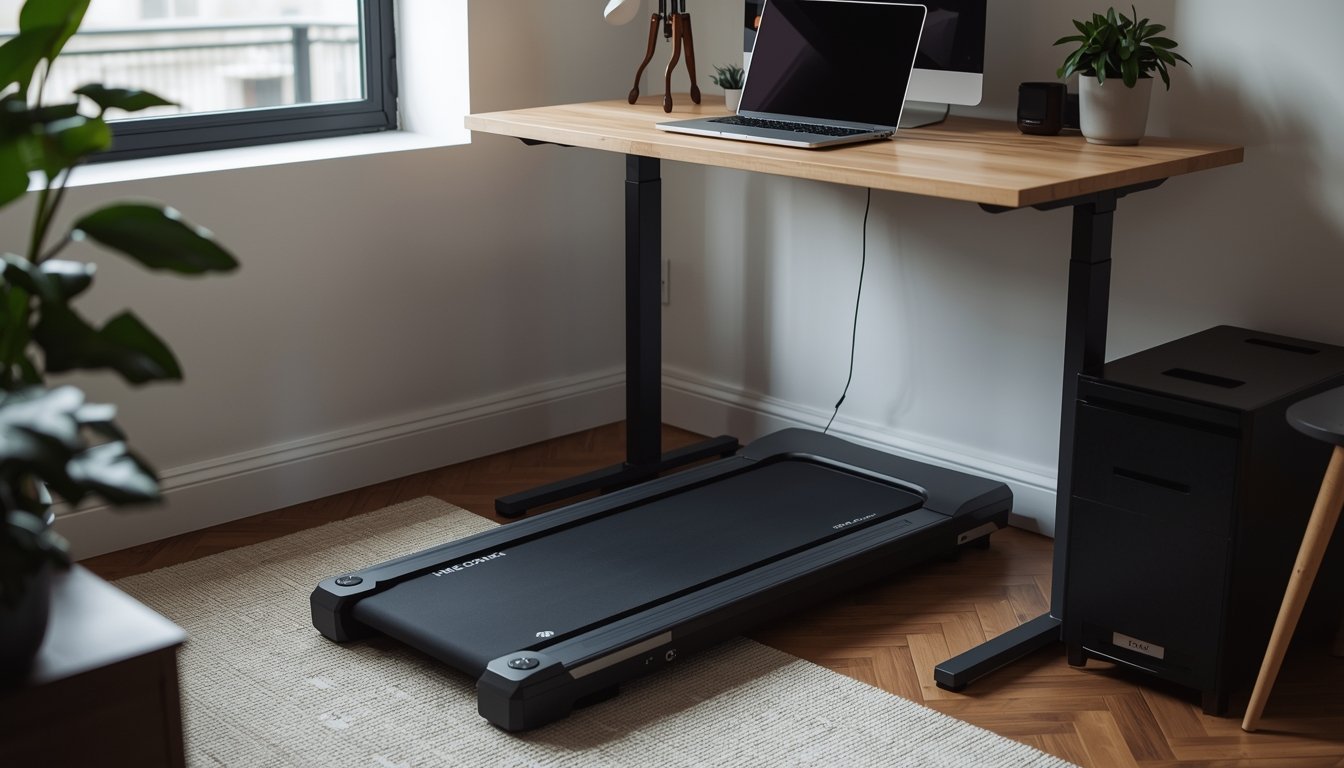
If you live in a small apartment, a walking pad can be one of the easiest ways to stay active without taking up valuable space. The key is choosing a model that fits your layout, stays quiet, and is easy to store when not in use.
Not all walking pads are designed with small spaces in mind, so understanding what actually matters will help you avoid buying something that becomes inconvenient or unusable.
How Space Constraints Affect Your Walking Pad Choice
In most apartments, space is the biggest limitation. You are usually working with a shared living area, a small home office, or even part of a bedroom.
A walking pad designed for compact use should:
- Fit fully under your standing desk without sticking out too far
- Be slim enough to slide under furniture when not in use
- Allow safe walking clearance around the sides
- Be easy to move without needing to lift heavy weight
A common issue is choosing a unit that technically fits, but leaves no room to step on and off comfortably. This becomes frustrating quickly, especially if you are using it daily while working.
If you are still unsure how much room you actually need, this guide on how much space you need for a walking pad breaks it down in more detail.
Noise Levels in Apartments (What Actually Matters)
Noise is one of the most overlooked factors until you start using the machine.
In apartments, especially with shared walls or neighbours below, even a quiet motor can become noticeable over time. The noise you hear is not just the motor — it is also:
- Foot impact on the belt
- Vibration transferring through the floor
- Surface type (carpet vs hard flooring)
- Speed settings during use
Lower speeds are usually much quieter and more suitable for work environments. Most people find that walking between 1–3 mph keeps both noise and movement manageable.
Using a protective mat can also reduce vibration significantly, particularly on hard floors.
Storage and Portability (Daily Use Reality)
One of the biggest advantages of a walking pad is the ability to store it easily — but not all models are equally practical.
In real apartment setups, you are likely to:
- Slide it under a couch or bed after use
- Store it upright against a wall
- Move it between rooms depending on your workspace
- Keep it partially visible in a shared area
Wheels are essential here. Without them, even a relatively light unit becomes awkward to move regularly.
Foldable designs can help, but they are not always necessary. A slim, low-profile model is often easier to manage day-to-day than a bulky foldable one.
Weight Capacity and Stability in Smaller Spaces
Stability becomes more noticeable in small apartments because you are often placing the walking pad on less-than-ideal surfaces.
If the unit feels unstable, it will:
- Create more noise
- Feel uncomfortable to walk on
- Shift slightly during use
- Increase long-term wear on the machine
Choosing a walking pad with a higher weight capacity generally improves stability, even if you do not need the full limit. This is especially important if you plan to use it regularly while working.
Features That Actually Matter for Apartment Use
When space is limited, extra features only matter if they improve usability — not just add complexity.
The most useful features for apartment setups include:
- Remote control for quick speed adjustments
- Clear digital display that is easy to see while working
- Low-profile design that fits under desks easily
- Quiet motor designed for indoor use
Some models include incline options or app connectivity, but these are secondary compared to size, noise, and ease of storage.
What to Avoid When Buying for a Small Apartment
A common mistake is buying based on features instead of practicality.
You should generally avoid:
- Bulky treadmill-style units with large frames
- Models without wheels or easy movement
- High-speed machines designed for running rather than walking
- Overly complex setups that require frequent adjustment
These may look appealing at first, but they rarely work well in a compact living space.
Choosing the Right Walking Pad for Your Setup
The best walking pad for a small apartment is one that fits naturally into your daily routine without becoming a hassle.
For most setups, that means prioritising:
- Compact size and slim profile
- Quiet operation for shared living spaces
- Easy storage and movement
- Stable, comfortable walking experience
If you are comparing specific options, this guide on the best walking pads for small apartments looks at models that are better suited for compact living.
Related Guides
Can You Use a Walking Pad on Carpet?
Can You Store a Walking Pad Under a Bed or Couch?
How Much Space Do You Need for a Walking Pad?